

Fort Pickens sits at the western tip of Santa Rosa Island in Pensacola Beach, Florida, and it ranks among the best-preserved 19th-century forts on the Gulf Coast. Built between 1829 and 1834, this pentagonal fortress held Union troops through the Civil War. Today you can walk its ramparts, camp near the beach, hike marsh trails full of birds, and fish off the pier, all steps from a Fort Pickens Campground site or a nearby rental.
I remember climbing to the top of the fort's bastion on my first visit, looking out over Pensacola Bay just as a formation of Blue Angels jets roared past on a practice run. That kind of moment sums up what makes this place special: history and nature sitting right next to each other.
Fort Pickens is such a captivating historical destination that one trip rarely feels enough, since between the fort, the trails, and the water, there's always another corner worth exploring. This guide covers what you need to plan a visit (or multiple visits), including the fort's past, its trails, campsites, and wildlife.
A Little About Us Before We Jump In
At Pensacola Beach Properties, we don't just offer a great selection of Pensacola Beach rentals; we've also got the kind of local tips that can seriously level up your trip.
Check out our destination blog where we publish survival guides, advice on traveling on a budget, and more articles on a wide variety of topics to help you plan and enjoy your Pensacola Beach trip.
Contents
1. The History Behind Fort Pickens
2. Exploring the Fort and Its Historic Structures
3. Planning Your Visit: Hours, Fees, and Getting There
5. Biking, Fishing, and Swimming
7. A Bonus Sight: The Blue Angels
8. Plan Your Fort Pickens Getaway
The History Behind Fort Pickens
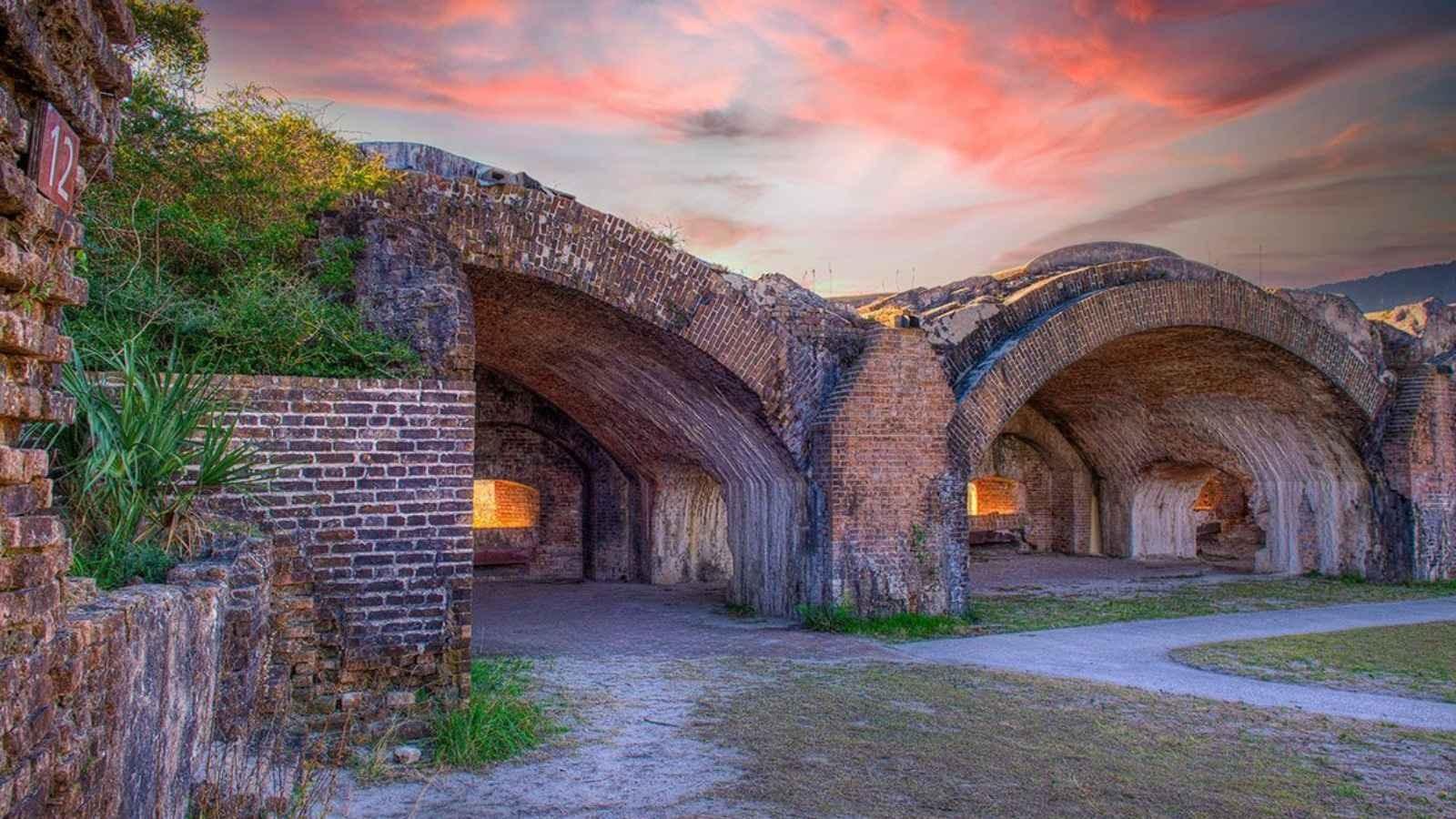
Construction on Fort Pickens began in 1829 and wrapped up in 1834, using more than 21 million bricks to build its five-sided walls. Engineers designed it to defend Pensacola Bay and the naval yard nearby, working alongside two other forts you can no longer visit today, since Fort McRee crumbled into the sea and only ruins of Fort Barrancas remain.
When the Civil War broke out, Union Lieutenant Adam Slemmer moved his small force out of Fort Barrancas and into Fort Pickens, since its position gave Union troops a stronger defense. That choice paid off. Fort Pickens became one of only four Southern forts that stayed under Union control for the entire war.
Colonel Harvey Brown took command shortly after, and by June 1861, Colonel William Wilson arrived with reinforcements from the 6th New York Infantry Regiment. In November 1861, soldiers inside the fort exchanged artillery fire with Confederate batteries across the bay, a fight you can still trace by walking the same walls those soldiers defended.
The fort's role in history didn't end with the war. Between October 1886 and May 1887, the Army held Apache leader Geronimo and fifteen other warriors here as prisoners. Local businessmen turned the imprisonment into a tourist draw and charged visitors to view the captives, a dark chapter the National Park Service now interprets on-site.
You can thank an 1899 accident for one of the fort's most striking features. A fire in a nearby warehouse spread to a powder magazine holding 8,000 pounds of black powder, and the blast tore out an entire section of the wall. Engineers never repaired it, so you can walk right up to that gap today.
Exploring the Fort and Its Historic Structures
Fort Pickens covers a lot of ground, and the buildings scattered around the island each tell a different part of its story.
Fort Pickens Itself
Start at the fort's Discovery Center, where exhibits and a short documentary lay out the site's military and cultural history before you step inside the walls. Grab a self-guided tour booklet here, or check the park calendar for a ranger-led tour meeting at the fort entrance.
At Fort Pickens, you will pass through the sally port, walk the same bastions Union troops defended in 1861, and see the section of wall torn out by the 1899 explosion. Don't forget to look for the interior rooms where Geronimo and his fellow Apache prisoners once lived, an important and often overlooked piece of the fort's past.
The Batteries Beyond the Fort
Fort Pickens Road loops past a string of concrete batteries built decades after the original fort, and each one adds a new layer to the timeline:
- Battery Cooper: finished in 1906, it still holds a 6-inch gun on its original disappearing carriage
- Battery Worth: sits closer to the water and doubles as a picnic spot, with pavilions, restrooms, and easy trail access
- Battery Langdon: completed in 1923, mounted 12-inch guns, and marks the eastern end of the paved Fort Pickens Trail
- Battery 234: built during World War II and buried under vegetation for camouflage, one of the few batteries with mounted guns still visible today
These batteries sit spread out across the island rather than clustered together, so a bike or car makes getting between them much easier than walking.
Ferry Plaza and the Old Life-Saving Station
Down near the water, Ferry Plaza covers the wharf area, including the fishing pier, ferry pier, and a small snack bar with exhibits on the harbor's old minefield defenses. If you arrive by the seasonal Pensacola Bay City Ferry, this is where you will step off. Nearby, a former Life-Saving Station now operates as the campground's registration office, a fitting second life for a building once used to rescue sailors in distress.
Planning Your Visit: Hours, Fees, and Getting There
Entrance Fees
The fee covers your entire group for seven consecutive days:
- $25 per private vehicle
- $20 per motorcycle
- $15 per person for pedestrians or cyclists
- $45 for an annual Gulf Islands pass, a good option if you plan more than one visit a year
- America the Beautiful passes are accepted for free entry
Staffed entrance stations take credit or debit cards only, so bring a card even if you plan to pay cash elsewhere. Outside staffed hours, pay at a self-registration kiosk using cash or a check, and keep exact bills on hand since the kiosk gives no change.
Hours
The Fort Pickens Area gate stays open from 5 a.m. to 8 p.m. from March through October, then 5 a.m. to 6 p.m. from November through February. The gate locks once the park closes, and only registered campers with a lock code can get through after hours. The fort itself opens for self-guided tours from 8 a.m. until sunset, and the Discovery Center keeps shorter hours, 9 a.m. to 4:30 p.m. daily.
Getting There and Around
Fort Pickens sits at 1400 Fort Pickens Road in Pensacola Beach. From Interstate 10, take Interstate 110 south toward downtown Pensacola, then follow Highway 98 east and Highway 399 south to Pensacola Beach, crossing the Bob Sikes Bridge, where a $1 toll applies heading to the island. The bridge is cashless, so the toll is collected electronically through SunPass or Toll-by-Plate.
Turn right onto Fort Pickens Road and follow it through the campground to the fort. A 25 mph speed limit keeps things relaxed on the island, and flat, paved roads make biking between sights easy. For a different arrival, the seasonal Pensacola Bay City Ferry runs Saturdays from March through October for the 2026 season, offering a scenic ride across the bay that drops you right at Ferry Plaza.
Book your stay through Pensacola Beach Properties and you will have easy access to the fort, the beach, and the trails, all within a short drive of your rental.
Hiking the Trails
Fort Pickens rewards hikers with easy, flat trails that mix nature with history:
- Blackbird Marsh Trail: a short loop near Campground Loops A and E, with interpretive signs and some of the best birding on the island. Start from Loop E if you are not camping, since parking is available near campsite E34
- Dune Nature Trail: a short boardwalk across from the campground entrance, crossing the dunes toward the beach. Storms occasionally reshape it, so check conditions before you head out
- Fort Pickens Trail: a 2-mile raised route between the fort and Battery Langdon, following an old railroad grade built for the coastal batteries during World War II
- Florida National Scenic Trail: Fort Pickens marks the northern terminus of this 1,300-mile trail, which covers 6.9 miles inside the unit and ends at Big Cypress National Preserve near the Everglades
Pack water and sun protection no matter which trail you choose, since shade is scarce once you leave the live oak groves near the campground.
Biking, Fishing, and Swimming
Biking
Fort Pickens Road runs flat and paved for its entire length, and the 25 mph speed limit keeps things comfortable for cyclists sharing the road with cars. For a car-free ride, the Fort Pickens Trail carries bikes along its full two-mile stretch, and the last three miles of the Florida National Scenic Trail near Battery Langdon also allow cyclists. Pack a lock if you plan to stop and explore a battery along the way.
Fishing
The fishing pier near Ferry Plaza is one of the few spots in the park where you can cast a line without a Florida fishing license, since the National Park Service maintains its own regulations here. Shore fishing works well along both the Gulf side and the bay side of the island, giving you plenty of room to spread out.
Swimming
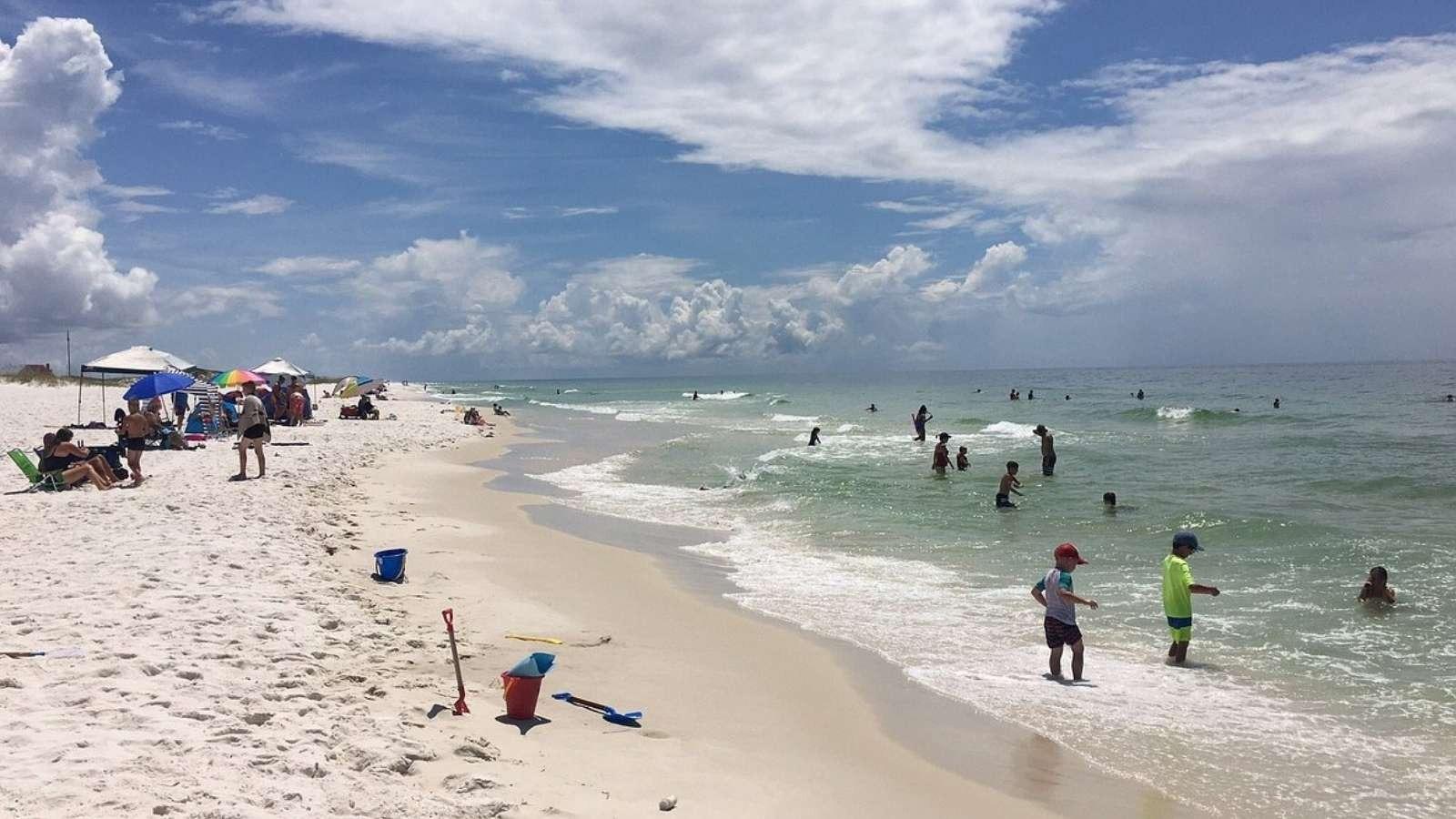
Langdon Beach, across from Battery Langdon, gives you the easiest beach access in the park, with a covered pavilion, restrooms, and lifeguards on duty from Memorial Day through Labor Day. Accessible beach mats and a beach wheelchair are available too, and you can borrow the wheelchair by asking a ranger at the campground registration office.
Wherever you swim, stay clear of the water within 200 feet of the fishing pier and ferry dock, and check flag conditions before you go in as rip currents can develop quickly here.
Bird Watching and Wildlife
Fort Pickens draws serious birders. Ospreys build nests within earshot of the Fort Pickens Trail, both west of Battery Worth and east of the campground near Blackbird Marsh. The marsh stays busy with songbirds and wading birds year-round, and the bridge a quarter mile east of the fort is one of the best spots on the island to watch herons and egrets working the shallows.
Groves of live oak trees give migrating songbirds a place to rest and feed, turning this stretch of Santa Rosa Island into a reliable stopover point each spring and fall. Bring binoculars if you have them so you can see the birds clearly among the marsh vegetation.
If you bring a dog, leashed pets are welcome on the trails, but they are not allowed on the beach or inside the fort, the batteries, or any other historic structure. That rule helps protect nesting shorebirds along the shoreline, so plan your dog-friendly stops accordingly if you are traveling with a pet.
A Bonus Sight: The Blue Angels
Keep an eye on the sky while you're here. Fort Pickens offers a front-row seat to one of Pensacola's favorite traditions.
The Navy's Blue Angels flight demonstration squadron practices regularly over Pensacola Bay, so visitors here often catch the jets tearing through formation drills from the fort's ramparts or the beach. Sessions typically happen around midday on Wednesdays, though schedules can shift, so check locally before you plan around it.
Plan Your Fort Pickens Getaway
Fort Pickens is the kind of place that stays with you. The gap in the wall from the 1899 explosion, the rooms where Geronimo was held, the ospreys circling over Blackbird Marsh, the Blue Angels cutting across the bay on a practice run — these details add up to something that feels genuinely irreplaceable on the Gulf Coast.
One visit rarely covers everything. Most people who come once start planning the next trip before they leave.
When you're ready to book, Pensacola Beach Properties offers rentals just minutes from Fort Pickens Road, giving you easy access to the fort, the trails, the beach, and the water. Browse our listings and find your home base on Santa Rosa Island.